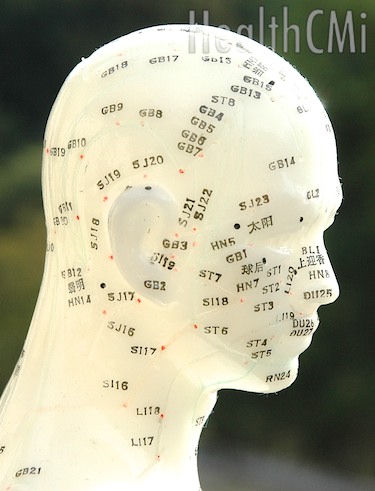
Tenderness at acupuncture point SP6 (Sanyinjiao) is linked to incidences of menstrual cramping with pain. Tenderness at this lower leg acupuncture point has been associated with dysmenorrhea in Traditional Chinese Medicine (TCM) for over a thousand years. Now, researchers have completed a randomized study to test the scientific basis for this phenomenon. The researchers discovered a significant “tenderness at Sanyinjiao (SP6) exists in women undergoing primary dysmenorrhea.”

The term dysmenorrhea refers to painful cramps occurring before or during the menstrual period. The symptoms of dysmenorrhea include abdominal pain and pressure, hip and lower back pain, and inner thigh pain. Primary dysmenorrhea is a type of recurring menstrual cramps not caused by other diseases.
The use of SP6 in acupuncture is highly defined and established. Indications for the use of acupoint SP6 in TCM are abdominal pain and distention, dysmenorrhea, irregular menstruation, uterine bleeding, leukorrhea, uterine prolapse, infertility, delayed labor, nocturnal emissions, enuresis, dysuria, lower limb disorders, vertigo from deficiency and insomnia. TCM theory states that SP6 benefits the spleen and kidneys, transforms dampness, and spreads the liver qi. SP6, roughly translated as three yin junction, is also the meeting point of the three lower yin meridians.
Research supports using SP6 for the treatment of dysmenorrhea. Shi, et. al., measured significant pain relief induced by needling acupuncture point SP6 for patients with primary dysmenorrhea. Blood samples were taken of participants during the study. It was shown that although acupuncture decreased menstrual pain, the beneficial effects were not related to changes in plasma levels of prostaglandins. The researchers conclude that the analgesic effects of SP6 are not mediated by prostaglandin variations in the bloodstream.
Another study of 66 patients finds acupuncture, combined with cupping and moxibustion, effective for the relief of menstrual pain. The patients had significant relief of menstrual pain within 2 - 6 acupuncture treatments. This study employed the use of SP6 and other acupuncture points: CV4 (Guanyuan), SP10 (Xuehai), K3 (Taixi), SP8 (Diji).
Licensed acupuncturists often combine acupuncture with herbal medicine for the treatment of gynecological conditions. Research backs up this time honored approach to patient care. A high quality study finds acupuncture and Chinese herbal medicine effective for the relief of endometriosis related pain. The total effective rate for auricular acupuncture was over 90%. The total effective rate for Chinese herbal medicine was 60%. A closer look reveals that the effective rate for mild to moderate dysmenorrhea due to endometriosis for both auricular acupuncture and Chinese herbal medicine is similar. However, auricular acupuncture showed greater efficacy for the relief of severe dysmenorrhea due to endometriosis. The randomized, blinded controlled trial was of high quality and a laparoscopy was required to confirm the diagnosis of endometriosis.
Zhou, et. al., find acupuncture combined with moxibustion and herbs is more effective for reducing menstrual pain and cramping than ibuprofen. The results were published based on research of a randomized investigation of patients with primary dysmenorrhea. Data points were taken at three, six and nine months after the beginning of treatment. The long-term positive clinical outcomes for patients having received acupuncture, moxibustion and herbal medicine was significantly superior to patients having taken ibuprofen.
Research conducted at the Affiliated Hospital of Hubei College of Medicine and Pharmacy involved a trial of 90 patients with primary dysmenorrhea. The patients were randomly divided into two study groups. Group 1 received acupuncture, herbal hot compresses and moxibustion. Group 2 received oral administration of ibuprofen at 300 mg per dose, three times daily. The treatment lasted for three menstrual cycles.
During the course of treatment, dietary restrictions were applied to both group 1 and group 2. Patients were advised to avoid eating raw, cold, pungent or very spicy foods. Patients were advised to increase their consumption of fresh vegetables and fruits. In addition, patients were advised to avoid prolonged exposure to cold temperatures on the lower abdomen. The total effective rate observed in the acupuncture group was much higher than that of the ibuprofen group.
The hot compresses were applied to the umbilical region and local regions of pain on the lower abdomen. The herbal medicines in the compresses were Dan Shen 10g, Yan Hu Suo 10g and Yi Mu Cao 30g. The herbs were decocted for one hour and strained. A 10 cm x 15 cm flannel cloth was soaked in the decoction, removed and squeezed to remove excess fluid. The cloth was applied to the patient. One hot compress treatment lasted for fifteen minutes.
Customization of acupuncture points was applied according to TCM differential diagnostics. Primary acupuncture points used in the study were:
Sanyinjiao (SP6)
Zusanli (ST36)
Guanyuan (CV4)
Qihai (CV6)
In cases of excess, the following were added:
Taichong (LR3)
Diji (SP8)
For cases of deficiency, the following acupuncture points were added:
Xuehai (SP10)
Geshu (BL17)
Reinforcing and reducing acupuncture needle manipulation techniques were applied until a deqi sensation was achieved. Moxa was applied to needles. The needles were withdrawn after the use of 3 - 5 cones of moxa. The approximate treatment time was 30 minutes. Acupuncture, moxibustion and hot compresses were applied once daily for a period of six days. The treatment started one week before the menstrual period began and ended by the first day of the menstrual cycle. The treatment resumed before the next menstrual period. One course of treatment comprised one menstrual period and the entire treatment lasted for three courses. The acupuncture group significantly outperformed the ibuprofen group at three, six and nine months after the beginning of treatment. The results indicate that acupuncture combined with moxibustion and herbal compresses is safe and effective for the treatment of primary dysmenorrhea.
A different approach to using acupuncture points includes injecting vitamins. Researchers at the University of California (UCSF, San Francisco) injected vitamin K1 into acupuncture point SP6. They discovered that the acupuncture point injections of vitamin K alleviate dysmenorrhea. The women participating in the study experienced less menstrual pain and a shorter duration of menstrual symptoms.
A survey of the participants finds 94% “agreeable to receiving injection therapy” and 77% would receive monthly injections if the treatment were made available. The researchers note, “This finding is consistent with outcomes from the Obstetrics and Gynecology Hospital in Shanghai, China, where the protocol was developed.”
A closely related investigation at the UCSF Clinical Research Center (San Francisco, California) tested plasma concentrations of vitamin K1 (phylloquinone) in patients with primary dysmenorrhea. Samples were collected 1 - 2 days after acupuncture point injections of vitamin K1 into acupoint SP6. A direct correlation between higher vitamin K1 levels and reduced menstrual pain and cramping was observed. The researchers note this indicates that further research into the role of vitamin K deficiency in inflammation and pain is warranted.
There is a historical precedent for the research and use of vitamin K in the USA. Routine injections of vitamin K1 are given to infants to prevent hemorrhage, taking advantage of vitamin K1’s anticoagulant properties. The researchers note, “Vitamin K is typically studied in the context of blood clotting and bone health although recent emerging research suggests that vitamin K may have other roles, including reproductive health.” The researchers note that prior studies show a relationship between vitamin K deficiency and menstrual disorders. Additional research demonstrates relaxation of uterine muscle spasms after administration of vitamin K. The researchers add, “Vitamin K therapy may decrease the length of prolonged menstrual flow as a result of its action on prothrombin, a vitamin K-dependent coagulation protein produced in the liver.”
The researchers describe a correlation between Traditional Chinese Medicine (TCM) theory and the current research. They note that the liver is an important organ in the regulation of menstruation and is involved in the movement of qi and blood. They add that acupuncture point SP6 is commonly used in the treatment of menstrual conditions by licensed acupuncturists “because it is a crossing point of the liver, spleen, and kidney channels, which are important in creating, storing, and moving blood.”
References:
Zhang, C. N., X. K. Huang, Y. Luo, J. Jiang, L. Wan, and L. Wang. "Reflection of dysmenorrhea in acupoint sanyinjiao (SP 6) region." Zhen ci yan jiu= Acupuncture research/[Zhongguo yi xue ke xue yuan Yi xue qing bao yan jiu suo bian ji] 39, no. 5 (2014): 401.
Shi, Guang-Xia MSc, Liu, Cun-Zhi PhD; Zhu, Jiang BSc; Guan, Li-Ping MSc; Wang, De-Jin MSc; Wu, Meng-Meng MSc. Effects of Acupuncture at Sanyinjiao (SP6) on Prostaglandin Levels in Primary Dysmenorrhea Patients. Clinical Journal of Pain: March/April 2011 - Volume 27 - Issue 3 - p 258–261.
Huang, Tao, Bin Han, Lu Wang, Ingrid Gaischek, and Gerhard Litscher. "Warming Needle Eases Severe Pain During Menses: A Case and Thermographic Measurement." Medical Acupuncture 25, no. 3 (2013): 227-231.
World Journal of Acupuncture - Moxibustion. Volume 22, Issue 2, 30 June 2012, Pages 68–70. Acupuncture and moxibustion combined with cupping for primary dysmenorrhea in 66 cases. Ming-gao LI, De-chen LI, Shu-ren LI.
Zhu, Xiaoshu, Kindreth D. Hamilton, and Ewan D. McNicol. "Acupuncture for pain in endometriosis." Sao Paulo Medical Journal 131, no. 6 (2013): 439-439.
Wayne PM, Kerr CE, Schnyer RN, et al. Japanese-style acupuncture for endometriosis-related pelvic pain in adolescents and young women: results of a randomized sham-controlled trial. J Pediatr Adolesc Gynecol 2008;21:247-257.
Zhou, Juan. “Acupuncture and Moxibustion plus Herbal Hot Compress for Primary Dysmenorrhea.” Journal of Clinical Acupuncture and Moxibustion 60.2 (2014): 11-13.
Chao, Maria T., M. L. Callens, C. M. Wade, P. D. Abercrombie, and D. Gomolak. "An innovative acupuncture treatment for primary dysmenorrhea: a randomized, crossover pilot study." Alternative therapies in health and medicine 20, no. 1 (2014): 49-56.
Chao, Maria T., Christine M. Wade, and Sarah L. Booth. "Increase in Plasma Phylloquinone Concentrations Following Acupoint Injection for the Treatment of Primary Dysmenorrhea." Journal of Acupuncture and Meridian Studies (2014). Author Affiliations:
Osher Center for Integrative Medicine, University of California, San Francisco, California.
Institute for East-West Medicine, New York, NY.
Jean Mayer USDA Human Nutrition Research Center on Aging at Tufts University, Boston, Massachusetts.
- See more at: http://www.healthcmi.com/Acupuncture-Continuing-Education-News/1414-acupuncture-point-sensitivity-linked-to-menstrual-pain#sthash.nJcWmjcX.dpuf

The term dysmenorrhea refers to painful cramps occurring before or during the menstrual period. The symptoms of dysmenorrhea include abdominal pain and pressure, hip and lower back pain, and inner thigh pain. Primary dysmenorrhea is a type of recurring menstrual cramps not caused by other diseases.
The use of SP6 in acupuncture is highly defined and established. Indications for the use of acupoint SP6 in TCM are abdominal pain and distention, dysmenorrhea, irregular menstruation, uterine bleeding, leukorrhea, uterine prolapse, infertility, delayed labor, nocturnal emissions, enuresis, dysuria, lower limb disorders, vertigo from deficiency and insomnia. TCM theory states that SP6 benefits the spleen and kidneys, transforms dampness, and spreads the liver qi. SP6, roughly translated as three yin junction, is also the meeting point of the three lower yin meridians.
Research supports using SP6 for the treatment of dysmenorrhea. Shi, et. al., measured significant pain relief induced by needling acupuncture point SP6 for patients with primary dysmenorrhea. Blood samples were taken of participants during the study. It was shown that although acupuncture decreased menstrual pain, the beneficial effects were not related to changes in plasma levels of prostaglandins. The researchers conclude that the analgesic effects of SP6 are not mediated by prostaglandin variations in the bloodstream.
Another study of 66 patients finds acupuncture, combined with cupping and moxibustion, effective for the relief of menstrual pain. The patients had significant relief of menstrual pain within 2 - 6 acupuncture treatments. This study employed the use of SP6 and other acupuncture points: CV4 (Guanyuan), SP10 (Xuehai), K3 (Taixi), SP8 (Diji).
Licensed acupuncturists often combine acupuncture with herbal medicine for the treatment of gynecological conditions. Research backs up this time honored approach to patient care. A high quality study finds acupuncture and Chinese herbal medicine effective for the relief of endometriosis related pain. The total effective rate for auricular acupuncture was over 90%. The total effective rate for Chinese herbal medicine was 60%. A closer look reveals that the effective rate for mild to moderate dysmenorrhea due to endometriosis for both auricular acupuncture and Chinese herbal medicine is similar. However, auricular acupuncture showed greater efficacy for the relief of severe dysmenorrhea due to endometriosis. The randomized, blinded controlled trial was of high quality and a laparoscopy was required to confirm the diagnosis of endometriosis.
Zhou, et. al., find acupuncture combined with moxibustion and herbs is more effective for reducing menstrual pain and cramping than ibuprofen. The results were published based on research of a randomized investigation of patients with primary dysmenorrhea. Data points were taken at three, six and nine months after the beginning of treatment. The long-term positive clinical outcomes for patients having received acupuncture, moxibustion and herbal medicine was significantly superior to patients having taken ibuprofen.
Research conducted at the Affiliated Hospital of Hubei College of Medicine and Pharmacy involved a trial of 90 patients with primary dysmenorrhea. The patients were randomly divided into two study groups. Group 1 received acupuncture, herbal hot compresses and moxibustion. Group 2 received oral administration of ibuprofen at 300 mg per dose, three times daily. The treatment lasted for three menstrual cycles.
During the course of treatment, dietary restrictions were applied to both group 1 and group 2. Patients were advised to avoid eating raw, cold, pungent or very spicy foods. Patients were advised to increase their consumption of fresh vegetables and fruits. In addition, patients were advised to avoid prolonged exposure to cold temperatures on the lower abdomen. The total effective rate observed in the acupuncture group was much higher than that of the ibuprofen group.
The hot compresses were applied to the umbilical region and local regions of pain on the lower abdomen. The herbal medicines in the compresses were Dan Shen 10g, Yan Hu Suo 10g and Yi Mu Cao 30g. The herbs were decocted for one hour and strained. A 10 cm x 15 cm flannel cloth was soaked in the decoction, removed and squeezed to remove excess fluid. The cloth was applied to the patient. One hot compress treatment lasted for fifteen minutes.
Customization of acupuncture points was applied according to TCM differential diagnostics. Primary acupuncture points used in the study were:
Sanyinjiao (SP6)
Zusanli (ST36)
Guanyuan (CV4)
Qihai (CV6)
In cases of excess, the following were added:
Taichong (LR3)
Diji (SP8)
For cases of deficiency, the following acupuncture points were added:
Xuehai (SP10)
Geshu (BL17)
Reinforcing and reducing acupuncture needle manipulation techniques were applied until a deqi sensation was achieved. Moxa was applied to needles. The needles were withdrawn after the use of 3 - 5 cones of moxa. The approximate treatment time was 30 minutes. Acupuncture, moxibustion and hot compresses were applied once daily for a period of six days. The treatment started one week before the menstrual period began and ended by the first day of the menstrual cycle. The treatment resumed before the next menstrual period. One course of treatment comprised one menstrual period and the entire treatment lasted for three courses. The acupuncture group significantly outperformed the ibuprofen group at three, six and nine months after the beginning of treatment. The results indicate that acupuncture combined with moxibustion and herbal compresses is safe and effective for the treatment of primary dysmenorrhea.
A different approach to using acupuncture points includes injecting vitamins. Researchers at the University of California (UCSF, San Francisco) injected vitamin K1 into acupuncture point SP6. They discovered that the acupuncture point injections of vitamin K alleviate dysmenorrhea. The women participating in the study experienced less menstrual pain and a shorter duration of menstrual symptoms.
A survey of the participants finds 94% “agreeable to receiving injection therapy” and 77% would receive monthly injections if the treatment were made available. The researchers note, “This finding is consistent with outcomes from the Obstetrics and Gynecology Hospital in Shanghai, China, where the protocol was developed.”
A closely related investigation at the UCSF Clinical Research Center (San Francisco, California) tested plasma concentrations of vitamin K1 (phylloquinone) in patients with primary dysmenorrhea. Samples were collected 1 - 2 days after acupuncture point injections of vitamin K1 into acupoint SP6. A direct correlation between higher vitamin K1 levels and reduced menstrual pain and cramping was observed. The researchers note this indicates that further research into the role of vitamin K deficiency in inflammation and pain is warranted.
There is a historical precedent for the research and use of vitamin K in the USA. Routine injections of vitamin K1 are given to infants to prevent hemorrhage, taking advantage of vitamin K1’s anticoagulant properties. The researchers note, “Vitamin K is typically studied in the context of blood clotting and bone health although recent emerging research suggests that vitamin K may have other roles, including reproductive health.” The researchers note that prior studies show a relationship between vitamin K deficiency and menstrual disorders. Additional research demonstrates relaxation of uterine muscle spasms after administration of vitamin K. The researchers add, “Vitamin K therapy may decrease the length of prolonged menstrual flow as a result of its action on prothrombin, a vitamin K-dependent coagulation protein produced in the liver.”
The researchers describe a correlation between Traditional Chinese Medicine (TCM) theory and the current research. They note that the liver is an important organ in the regulation of menstruation and is involved in the movement of qi and blood. They add that acupuncture point SP6 is commonly used in the treatment of menstrual conditions by licensed acupuncturists “because it is a crossing point of the liver, spleen, and kidney channels, which are important in creating, storing, and moving blood.”
References:
Zhang, C. N., X. K. Huang, Y. Luo, J. Jiang, L. Wan, and L. Wang. "Reflection of dysmenorrhea in acupoint sanyinjiao (SP 6) region." Zhen ci yan jiu= Acupuncture research/[Zhongguo yi xue ke xue yuan Yi xue qing bao yan jiu suo bian ji] 39, no. 5 (2014): 401.
Shi, Guang-Xia MSc, Liu, Cun-Zhi PhD; Zhu, Jiang BSc; Guan, Li-Ping MSc; Wang, De-Jin MSc; Wu, Meng-Meng MSc. Effects of Acupuncture at Sanyinjiao (SP6) on Prostaglandin Levels in Primary Dysmenorrhea Patients. Clinical Journal of Pain: March/April 2011 - Volume 27 - Issue 3 - p 258–261.
Huang, Tao, Bin Han, Lu Wang, Ingrid Gaischek, and Gerhard Litscher. "Warming Needle Eases Severe Pain During Menses: A Case and Thermographic Measurement." Medical Acupuncture 25, no. 3 (2013): 227-231.
World Journal of Acupuncture - Moxibustion. Volume 22, Issue 2, 30 June 2012, Pages 68–70. Acupuncture and moxibustion combined with cupping for primary dysmenorrhea in 66 cases. Ming-gao LI, De-chen LI, Shu-ren LI.
Zhu, Xiaoshu, Kindreth D. Hamilton, and Ewan D. McNicol. "Acupuncture for pain in endometriosis." Sao Paulo Medical Journal 131, no. 6 (2013): 439-439.
Wayne PM, Kerr CE, Schnyer RN, et al. Japanese-style acupuncture for endometriosis-related pelvic pain in adolescents and young women: results of a randomized sham-controlled trial. J Pediatr Adolesc Gynecol 2008;21:247-257.
Zhou, Juan. “Acupuncture and Moxibustion plus Herbal Hot Compress for Primary Dysmenorrhea.” Journal of Clinical Acupuncture and Moxibustion 60.2 (2014): 11-13.
Chao, Maria T., M. L. Callens, C. M. Wade, P. D. Abercrombie, and D. Gomolak. "An innovative acupuncture treatment for primary dysmenorrhea: a randomized, crossover pilot study." Alternative therapies in health and medicine 20, no. 1 (2014): 49-56.
Chao, Maria T., Christine M. Wade, and Sarah L. Booth. "Increase in Plasma Phylloquinone Concentrations Following Acupoint Injection for the Treatment of Primary Dysmenorrhea." Journal of Acupuncture and Meridian Studies (2014). Author Affiliations:
Osher Center for Integrative Medicine, University of California, San Francisco, California.
Institute for East-West Medicine, New York, NY.
Jean Mayer USDA Human Nutrition Research Center on Aging at Tufts University, Boston, Massachusetts.
- See more at: http://www.healthcmi.com/Acupuncture-Continuing-Education-News/1414-acupuncture-point-sensitivity-linked-to-menstrual-pain#sthash.nJcWmjcX.dpuf